
Beyond the Address #6: A Good Price Can Still Be an Expensive Mistake-The final in the series
Beyond the Address #6: A Good Price Can Still Be an Expensive Mistake
The final installment of the Beyond the Address series.
Over the past several emails, I have tried to share more than buying advice. I wanted to give you a clearer sense of how I work: how I evaluate homes and communities, and how I think through the decisions that are not obvious from a listing, a photograph, or even a showing.
Real estate is rarely just about the house. It is about how the property fits the buyer's life, how the community will feel over time, and which compromises are worth accepting.
We all want to feel like we won. That is human nature. For some buyers, winning means negotiating a substantial reduction. For others, it means securing the home before another buyer steps in. Sometimes it is simply knowing the seller moved farther than expected.
There is nothing wrong with wanting a strong deal. But at the luxury level, a buyer can negotiate a good price and still make an expensive mistake. The purchase price is only the entry fee. What a property truly costs is spread across five separate calculations: what it costs to own, to maintain, to improve, to live with, and eventually to sell. A discount on the first can be erased by any of the other four.
The rest of this letter is those five calculations, and the negotiation that sets them in motion.
First, the price itself: negotiating firmly is not negotiating recklessly
Luxury sellers are not always driven by the pressures that move the broader market. Many do not need to sell. They may own the property outright, hold multiple residences, or simply be willing to wait. Their pricing may be ambitious, but that does not mean they will respond well to an offer designed mainly to test how low they will go.
Coming in too low can put a seller on defense. It can make them feel the buyer does not understand the property, the community, or what was invested in creating the home. Once that happens, the negotiation turns emotional rather than strategic.
My job is not to protect the seller's feelings, and it is not to encourage my client to overpay. It is to find how far we can push without needlessly damaging our position. A strong offer is not always the lowest offer. Sometimes it is the offer that gives the seller enough reason to engage while preserving our leverage on furniture, repairs, closing terms, and other points that can be worth more than another reduction. The objective is not to win the negotiation. It is to avoid losing the right property over a number that would never have changed the buyer's life.
The cost to own: the current tax bill is not the whole story
For most luxury buyers, financing is not the concern. The carrying cost is. Property taxes lead that list, and the current bill should never be treated as the buyer's future obligation. Assessed value, ownership history, exemptions, improvements, and future reassessment exposure can all move the number, and on a high-value home even a modest shift compounds into real money over a decade.
The question is not whether the buyer can afford the taxes. It is whether the property delivers enough to justify them. A buyer may happily pay more for exceptional privacy, a superior homesite, better airport access, or a club they will actually use. Paying the same for space and amenities that rarely get used is a very different calculation.
The cost to maintain: the home has to run without friction
Every luxury buyer expects ongoing expense. Insurance, association dues, landscaping, pool service, security, utilities, and staffing are not surprises. The harder question is whether the home runs cleanly around the way the owner lives.
Can it be secured, monitored, and maintained when the owner is away? Can staff, vendors, caterers, and deliveries reach the property without crossing through the private areas? Does the home feel comfortable when only two people are in it, or does it need an event to feel used? The luxury is not simply more square footage. It is square footage that works without creating daily friction, month after month, whether or not anyone is watching.
The cost to improve: know what can change and what cannot
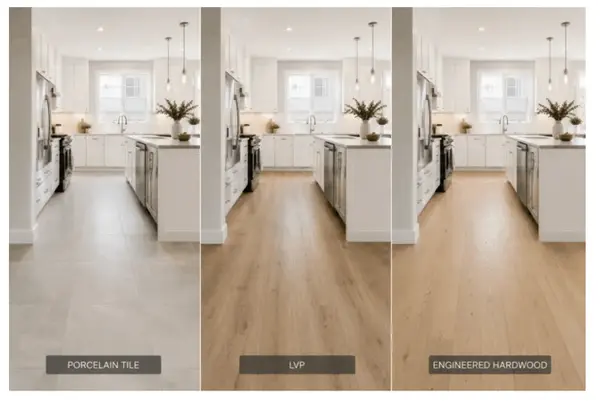
Some problems can be solved. An outdated kitchen can be remodeled. Flooring, lighting, bathrooms, and landscaping can be changed. Even major renovation can make sense when the location, the homesite, and the structure are exceptional.
Other conditions are effectively permanent. The orientation of the home cannot be moved. Neither can the elevation, the neighboring sightlines, the distance from the clubhouse, the airport access, or the architectural direction of the community around it.
So when a buyer says, "We can always change it," my next question is simple: what exactly, at what cost, and will the result justify the disruption? Luxury renovation is not just finishes. It is architecture, engineering, permitting, structural work, specialty materials, technology, and a year of coordination. The dollars matter. So does the year. For some buyers, creating a home is part of the pleasure. For others, the construction becomes the very lifestyle they were trying to escape.
The cost to live with: the hidden costs are lifestyle costs
This is the largest calculation, and the one least visible on any statement. A property can be beautifully designed, impeccably finished, and located in a highly regarded community, and still be the wrong purchase. The better question is not whether the home is impressive during a showing. It is whether the life around it still feels right after the first year.
Time and convenience. At this level, time can be worth more than square footage. For buyers who travel, airport access matters, and so does the predictability of the drive. An extra twenty or thirty minutes looks like nothing on a map and feels like something else entirely after repeated early departures and late arrivals. The same applies to dining, medical care, shopping, and the parts of the city the buyer expects to use. A secluded setting can be wonderful. But privacy and isolation are not the same thing, and the cost of isolation shows up in the time spent driving rather than on any ownership statement.
Privacy, experienced rather than assumed. Privacy is one of the most requested luxury features and one of the most misunderstood. A large lot does not guarantee it. A guard gate does not guarantee it. A golf setting can feel completely open from one angle while exposing the pool or primary bedroom from another. I look at elevation, neighboring balconies, walking paths, golf traffic, future construction, and how the landscaping will mature. A buyer may be fine with golfers passing at a distance yet object to a neighbor's terrace overlooking the pool. These are not defects. They are compromises, and the time to identify them is before they become daily irritations.
The club, not just the course. A golf-course home offers open space, dramatic landscaping, and a privacy that is hard to duplicate. But the course is part of the purchase. Does it stay interesting after a summer of rounds? Does it suit the buyer's level of play? And the course is only the start. How active is the membership? Do the dining, practice, fitness, and social facilities become part of the routine? That is why I arrange more than a drive through the community. When possible, I coordinate clubhouse tours, club dinners, and rounds of golf, because a buyer should experience the place as a prospective member. The real test may be the Tuesday afternoon round, the dinner afterward, and whether the people at the next table feel like people the buyer would enjoy knowing.
The character around the home. Communities evolve. A neighborhood built in traditional or Mediterranean architecture may begin filling its last lots with modern homes, or existing houses may be renovated in ways that change the streetscape. That does not automatically weaken a community, but it changes how it feels. A buyer drawn to a traditional home should understand whether that character is likely to stay dominant or whether the neighborhood is moving toward a mixed identity. The issue is never which design is better. It is whether the buyer will still feel connected as the homes around them change.
The cost to sell: resale begins the day you buy
Most buyers do not want to think about selling before they have even purchased. I understand that. But high-value real estate can mean a narrower buyer pool, longer marketing periods, and very specific preferences, so the eventual sale deserves a seat at the table from the start.
How many future buyers will appreciate the architectural style? How many will want this much square footage? Will the home appeal to both full-time and seasonal residents? Will the homesite stay desirable as neighboring lots are completed? Will it still compete against newer construction five or ten years from now?
I think of this as exit friction: anything that will later require extra time, price reductions, or concessions when the home returns to the market. A property can appreciate with the broader market and still underperform its competition because future buyers keep objecting to the same feature. Architecture is personal. Marketability is not. The home does not need to appeal to everyone, but the buyer should understand how design trends may shape demand for it.
Putting the five together
Here is where the calculations meet. Suppose one property can be bought for substantially less than another. At first glance, the lower price is the better deal.
Then account for the renovation, the higher taxes, the added travel time, the weaker privacy, the thinner club experience, the dated architecture, or a floor plan that narrows the future buyer pool. The apparent savings can vanish. Meanwhile the higher-priced home may already own the better homesite, the stronger architectural relevance, the easier airport access, the better club, and the broader resale appeal. Paying more does not automatically make it the better purchase. Paying less does not automatically make it a bargain.
This is why a low price so often deserves a second look. When a home is priced well below its competition, there is usually a reason. Sometimes it is a genuine opportunity: a motivated seller, a poorly marketed listing, a stale one, or improvements that are simple to evaluate. But sometimes the discount is compensation for a compromise the next buyer will also notice. That can still be a smart purchase, provided the buyer understands the tradeoff and values the home accordingly. The mistake is believing the discount made the compromise disappear.
So the question is never simply, "How low can we get the seller?" The better questions are these. What compromises are built into the price? Which conditions can be improved, and which cannot? Will the community still support the buyer's life after the novelty fades? Is the golf, dining, and social experience something the buyer will actually use? How convenient is the home for travel and everyday life? How is the neighborhood's character changing? What will the property cost to carry, maintain, and update? And when it is time to sell, what will the next buyer question?
My job is not to help a buyer negotiate the largest possible reduction. It is to understand whether a property still makes sense once we account for the costs, compromises, and risks that never appear on the listing sheet. Because a good price can still be an expensive mistake. The real win is not how far the seller came down. It is choosing a property that continues to feel right long after the negotiation is over.
As this series ends, thank you for reading, and for letting me share a little more about how I approach this work. I do not simply search for impressive homes and negotiate contracts. I look at the full picture: the property, the community, the lifestyle, the ownership costs, the compromises, and the long-term implications of the decision.
That is what I mean by looking beyond the address.
Categories
Recent Posts